

The Rise of Corporate Coworking Spaces: Why Even Enterprises Are Moving In
Table of Contents
Once seen as the natural habitat of freelancers and startups, coworking spaces have now caught the attention of India’s biggest enterprises. Changing work patterns, the shift towards hybrid teams, and the need to manage operational costs have pushed corporate leaders to rethink the value of traditional long‑term leases. The result is a growing preference for workspace models that can be set up swiftly, keep teams connected across multiple locations, and adapt to business priorities without the burden of fixed commitments.
In this blog, we highlight why corporate coworking spaces are gaining rapid adoption, the benefits they bring to large organizations, and the key features that matter most when choosing a flexible office solution.
Shift from Traditional Leases to Coworking
The corporate world is undergoing a major shift as large enterprises abandon traditional office leases for corporate coworking spaces. While coworking was once associated with freelancers and startups, today’s major corporations are choosing flexible office solutions to cut costs, gain agility, and accommodate hybrid work models.
Traditional office leases force companies into rigid contracts that often outgrow their current needs or limit expansion plans.
In the first quarter of 2023, coworking spaces contributed 27 percent of net office absorption in India’s top seven cities, compared with 14 percent in 2019. For teams, these spaces provide prime locations, fully equipped offices, and the flexibility to adjust footprint as needs change, creating a work environment that supports both efficiency and agility.
The Drivers of this Shift: Flexibility, Scalability, and Reduced Overheads
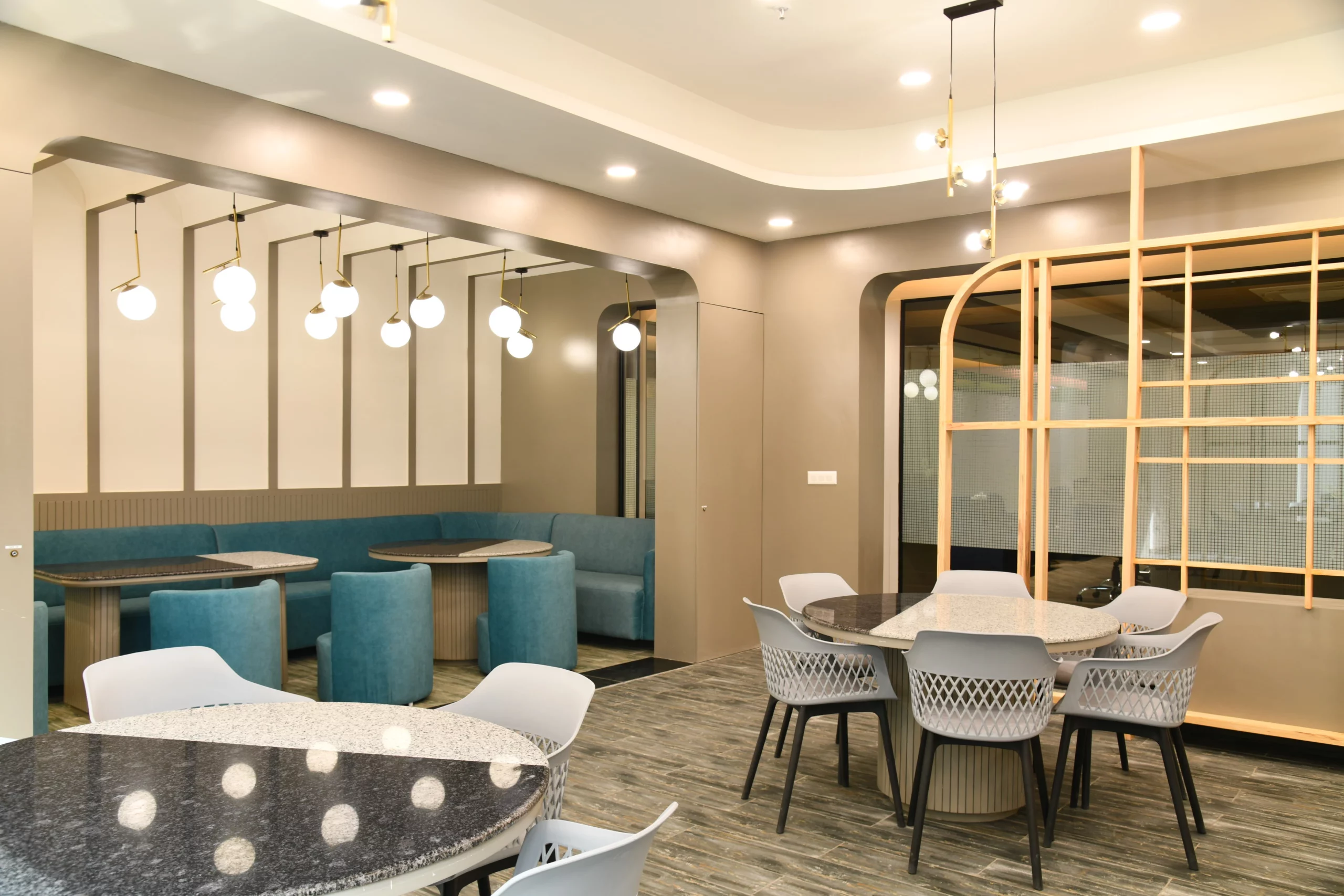
Corporate coworking spaces give enterprises the freedom to right-size in real time, matching headcount and project cycles without sunk costs. Teams can secure dedicated floors or private suites with month-to-month agility, then add satellite capacity in prime micro-markets when projects spike, instead of being trapped by 5–9 year leases.
Flexibility is now a boardroom priority as hybrid work settles in, and it is reshaping how portfolios are planned across India’s top office markets. Corporate coworking lets enterprises right-size in real time. Teams can secure private suites or entire floors on shorter tenures, then add satellite capacity when projects spike.
Scalability is the second major driver. Leaders want to open or consolidate sites in weeks, not quarters. The projected expansion of flex stock to about 121 to 125 million square feet by March 2027 provides the runway to test new talent markets, add distributed pods, or shift work closer to clients without lengthy build outs.
Cost savings also matter. Traditional leases require heavy capital expenditure and maintenance, whereas enterprise coworking solutions convert costs into predictable per-seat operating expenses, including reception, housekeeping, utilities, security, and IT.
Decision‑makers value speed to productivity. Equipped with ready‑to‑use meeting rooms, boardrooms, and secure networking, teams can start work immediately. This operational advantage is becoming standard practice.
The Benefits: Team Morale, Decentralization, Quick Expansion
Corporate coworking spaces are reshaping not only where companies operate but also how their teams work, connect, and grow. For leaders trying to balance productivity with employee satisfaction, these spaces are proving to be a strong strategic fit.
Boosting team morale
A workplace’s atmosphere plays a major role in influencing employee motivation and engagement. Coworking spaces feature modern interiors, natural lighting, vibrant community areas, and amenities such as premium coffee stations, wellness rooms, and breakout zones. These elements help employee comfort and engagement.
Supporting decentralization strategies
Post-2022, many enterprises adopted a hub-and-spoke workplace approach, keeping a central headquarters while distributing smaller teams across multiple coworking centers. This decentralization improves access to local talent, reduces commute times, and brings teams closer to clients.
Enabling quick expansion
In fast-moving industries, the ability to establish a fully functional office within days, not months, is a competitive advantage. Corporate coworking operators handle everything, from workstation setup to IT infrastructure, security, and maintenance, allowing enterprises to focus on business without construction or vendor delays.
How Vision Spaces Tailors Offerings for Enterprise Needs
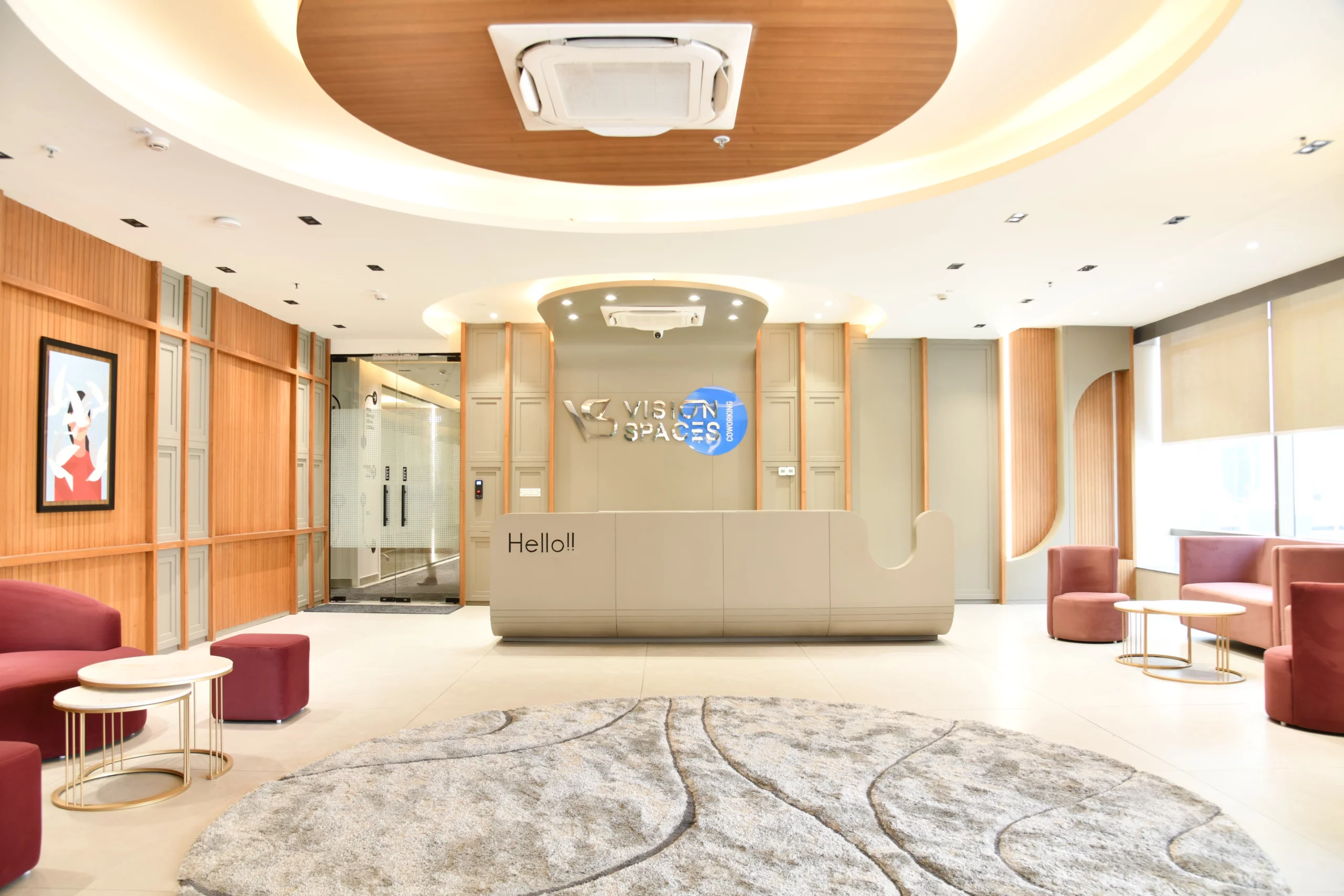
For corporate tenants, the decision to move into coworking is rarely just about renting desks, it’s about finding a partner who can match their operational, security, and cultural requirements. At Vision Spaces, this translates into enterprise coworking solutions that are designed from the ground up to fit a company’s way of working.
Custom-configured private areas
Enterprises often need branded environments that reflect their corporate identity. Vision Spaces sets up dedicated zones and private floors with customized layouts, company branding, and controlled access, giving the privacy of a traditional office while preserving the flexibility of a managed model.
Enterprise-grade IT and data security
Security of digital assets and proprietary data is at the top of every CIO’s checklist. Vision Spaces works with corporates to deliver private VLAN setups, secure Wi‑Fi, dedicated server rooms, and access-controlled entry. In sensitive industries like BFSI, healthcare, and IT services, these capabilities help companies meet compliance requirements without adding an in‑house facilities and IT workload.
Multi-city workspace access
For companies with geographic spread, being able to expand into multiple cities quickly is vital. Vision Spaces offers consistent service standards across its network, so an enterprise can replicate its setup in Gurugram, Bengaluru, or Pune without renegotiating every detail.
Amenities that keep employees engaged
From premium meeting rooms to wellness areas and breakout lounges, Vision Spaces prioritizes employee comfort and productivity. The goal is to make sure corporates can offer their teams the same, or better facilities than those in fixed traditional offices, boosting morale and retention in the process.
End‑to‑end facilities management
Enterprises moving into Vision Spaces don’t have to think about housekeeping, maintenance, pantry services, or vendor management. All operations are handled in‑house, letting corporate teams focus entirely on client delivery and business outcomes.
Key Features Corporates Want in Coworking Spaces
When large enterprises consider moving into corporate coworking spaces, the conversation often starts with flexibility and cost, but it quickly moves to specific operational requirements that protect brand integrity and support business continuity. Three features consistently top the checklist for enterprise coworking spaces.
Data security and IT infrastructure. Enterprises look for private VLANs, firewalled networks, biometric entry, and 24×7 CCTV. Sectors like BFSI and healthcare often require VPN ready connectivity, device whitelisting, and dedicated server rooms, plus an on site IT helpdesk for fast response.
Dedicated zones and access control. Teams handling strategic work still need privacy. Exclusive floors or suites with role based access allow confidential projects to run inside a shared ecosystem, often with company branding for cultural continuity.
Professional meeting and collaboration spaces. Frequent huddles, client presentations, and board reviews require rooms with reliable AV, soundproofing, and high speed connectivity. A mix of two person focus rooms, mid-sized collaboration spaces, and larger workshop halls lets teams choose the right setting without leaving the building.
Conclusion: Future of Enterprise‑grade Coworking in India
Corporate coworking in India has moved from a niche choice to a widely adopted model for companies that value flexibility, speed, and quality. The rise of hybrid work, decentralized teams, and adaptable spaces has made this approach a practical alternative to rigid, long leases.
With supply expanding and providers delivering secure, customized workspaces, businesses can now enter markets faster, access talent in multiple locations, and reduce the burden of managing traditional offices. For many decision‑makers, coworking offers both operational efficiency and an engaging environment that attracts and retains teams. This model is set to play an even stronger role in shaping office space choices and workforce distribution strategies in the years ahead.
Experience our community first‑hand. Reach out today for a personalized enterprise workspace consultation.
FAQ's
Corporate coworking spaces are flexible office environments designed to meet the needs of large companies and organizations. Unlike traditional leased offices, these spaces offer ready-to-use workstations, private zones, meeting rooms, and shared amenities within a managed facility. They support adaptable team sizes, multi-location setups, and include services like IT infrastructure, security, and maintenance delivered by the coworking provider.
Enterprises in India choose coworking spaces primarily for flexibility, scalability, and cost control. These spaces allow companies to adjust their office footprint quickly without long-term lease commitments. Additional benefits include improved employee morale through enhanced work environments, decentralized office models closer to talent pools, and access to premium locations without heavy capital expenditure.
Yes, corporate coworking spaces are built to meet stringent security and data privacy needs of sensitive operations. Providers offer enterprise-grade IT infrastructure, such as private VLANs, firewalled networks, dedicated server rooms, biometric access control, and CCTV surveillance. These features help regulated industries like IT, BFSI, and healthcare comply with data protection requirements while ensuring secure physical and digital work environments.
Companies prefer corporate coworking because it removes the constraints of long-term leases and upfront costs. Coworking spaces provide ready-to-use offices with comprehensive services bundled in, allowing businesses to focus resources on core activities. The flexibility to expand or reduce space as needed, faster setup times, decentralized work locations, and modern amenities contribute to improved employee satisfaction and operational agility.
The cost of corporate coworking spaces varies by city, location, and level of customization, but typically converts traditional capital expenses into predictable per-seat operating costs. These operating expenses usually include utilities, security, IT services, reception, and maintenance. Pricing models are designed to be scalable and flexible with month-to-month terms, helping companies avoid large upfront investments and adapt expenses alongside business needs.